Sunday, 5 February 2012

Difficulties - Editing Film Trailer

When editing our film, we did encounter some difficulties. Firstly, we couldn't add the files from our camera as we used an upgraded version of premier pro, Adobe Premier Pro CS3. Therefore we had to download a converting program to covert them from VLC so that we could import them. 


After this, a similar problem we had last year was the lighting, any dark shots we took while filming where very bad quality when put onto the computer. One scene of our trailer was when the mother suffocates the baby, this was key to be dark and dull as it was a dream and to create a tense atmosphere. However when putting it on the software it was barely visible. Therefore we had to do our best to make the brightness effective. It is clear what is happening, however it's not as clear as we would have hoped. 

Another problem we had was adding text. We had a video of red blood/smoke floating on a black ground. We wanted our writing to go on top of this, unfortunately we were unable to do this on premier pro. We therefore did it on windows movie maker, we added the writing and made multiple videos with all the writing we needed for each section. We then uploaded them to YouTube as we were still unable to add it directly. Once on YouTube we downloaded our video from our account. Converted it to a compatible format so that we could add it to our trailer. Thus managing to solve this problem successfully. 


We also had issues with the size of our trailer, on Adobe Premier Pro CS3 the video was the size that we wanted and therefore thought it would be on all programs, however when uploading the video onto a DVD disc and YouTube the video was extremely small. As you can see we can still see the video and understand what is going on however it was very disappointing to see. We are currently trying to look for a solution. 


Editing - Film Trailer

We edited our film clips to create and put together our trailer on Adobe Premier Pro CS3. When we imported our clips from our camcorder, we had taken many so that we had a lot to choose from. We sifted through them and chose the ones we thought would work best in our trailer. Although we have used the older version of premier pro, we wanted to familiarise ourselves with the new version, therefore the clips that we didn't use, we imported onto adobe premier pro CS3 and did some editing on them so that we could use some of the features and it would not matter if we made a mistake. 


Transitions: one transition we used was dip to white, this meant that one shot faded into another shot in white. We did this during the hospital scene when Helena had just had her baby. We did this to represent the purity and innocent nature of the situation. However in contrast, as the trailer continues, the themes and atmosphere become a lot darker, therefore dipped to black we used to convey this


We couldn't actually add text on the program, we therefore did it on windows movie maker, but when imported, the writing went blurred we therefore tried to change this with deepen, contrast, trying to make it brighter. We used dip to black these two shots, fading from the text ‘from the makers of…’ to ‘distorted’ this emphasises and draws out this feature. 


With the main title, we knew we had to make it stand out above everything else to make it memorable. We did this by using white writing on black background, we found a feature on the program to add a star flashing in the middle of the D.I.D and YOU. Along with the red smoke it emphasises this title. 


This shot is of the shadow of a hand grasping the baby, we had to therefore adjust the lighting to ensure that the shadow of the hand could be seen clearly. This is where we used ‘Brightness & Contrast’ tab and changed the levels. This was the outcome, we can clearly see the hand shadow as well as can be expected. 


Here we used cross dissolve, to illustrate the use of match on action and her actions of walking into and coming into her home.


We also used dipped to black so that our logo of 'S.E.R Productions' would appear slowly from dark to light to emphasise this.


We had trouble with the writing as it went blurred. This is when we tried to use different levels of brightness.

Also, we created this production company to increase how realistic this is, 'S.E.R' stands for Sarah.Emma.Rebecca. and we feel that its a catchy and memorable title for a company.


Audience Theory

Audience theory is defined as the study of the audience's role in any kind of mediated communication. For example like films, television etc. 'Active audience theory' arose from a sub-cultural and Marxism inflected view.
Active audience theory is the idea that people receive and interpret media messages in different ways, dependent on what their age, ethnicity, social class and gender are, along with other factors. The audience isn't just passive and accepts what happens. This is in relation to Katz & Lazarsfeld who in 1955 came up with the two step flow theory in which people discuss the media text they have seen with their friends and social networks where they will be opinion leaders. There opinion on a certain media text sets the tone for what the rest of the group will think. 

David Morley found that viewers tend to interpret media text in three ways.
1) Oppositional - those who disagree with the message and reject it
2) Negotiated - overall the view is agreed but slightly altered
3) Dominant - the message is fully accepted by the viewer

The Hypodermic Needle Model:
This theory suggests that audiences passively take in the information they receive from, they directly take in the intended message and wholly accept it without question. This is as if the information was 'injected' into the audience and was not challenged. This theory suggests that individuals don't have their own opinions but instead can be easily manipulated.
An example of this was the Nazi Propaganda, the powerful in society controlled the mass media and reflected their views through the media and the audience did not question it. 

Uses and Gratification:
This theory suggests that there is a highly active audience who use the audience to their advantage and needs: such as entertainment, information and identification. The main areas in this model are;
1) the need for information about our geographical and social world (news and drama)
2) the need for identity, the use of characters and personalities to define our sense of social behaviour (film and celebrities)
3) the need for social interaction and to experience the relationships and lives of others (soaps and sitcoms)
4) the need for diversion and entertainment (quizzes and game shows)

The Two-Step Flow:
The hypodremic model soon became to simplistic and a more detailed and accurate over view of the audiences relationship to the media was needed due to the mass media becoming an essential part of life. It was found that the media was not directly taken in by the audience but the information was filtered through 'opinion leaders.' What would happen is that a person may watch something on television or a film however, through their soical network 'opinion leaders' e.g the dominant speakers, change others perception of media text. Therefore they do not passively accept the information directly.


By researching all of these media theories, once we have created our trailer, poster and magazine cover, we can apply these theories to them and understand more about our key demographic audience. 


Wednesday, 7 December 2011

Research - Age Rating

When making our film, we will have to think of what age our audience will be and what rating the film will recieve, therefore we have researched into the british board of film classification to read the guidelines and how they classify films in order to classify our own and apply these guidelines to the content of our film.

U - Universal meaning suitable for all
This means that a film recieving a rating of U should not upset any child and should be suitable for audiences aged four years and over and should diplay positive moral framework. There should be no disciminatory language, no refrences to drugs and aspects like Horror, language, violence and sex should be very mild. For example only kissing, no nudity in a sexual content and horror should no cause anxiety to the children.


 PG - Parental Guidance
This refers to genral viewing but some scenes may be unsiutable for young children. A PG film should not disturb a child aged around eight or older, however parents are advised to make a judgement as to whether the content may upset younger or more sensitive children. Aspects like Horror should not be prolonged or intense, along with violence and imitable behaviour should not be dangerous that potentially a child could copy. Aspects of drugs should be to a minimal and should only be referenced briefly unless it is carrying a suitable anti-drug message. Moderate sexual references and none detailed violence.

In terms of our film, we feel these two particular ratings are not suitable as our film involves a certain degree of violence and horror which is unsuitable for children, along with the theme and plot that shouldn't be exposed to as the murder of a baby is not something children should watch and may cause upset. Therefore we will not be rating our film PG or U.

12A/12 - Suitable for 12 years and over
Simirlar criteria are used to classify films that are a '12A' or '12' rating. These catogories are given when the work is suitable in general for those aged 12 and over. Works classified as this may upset children under the age of 12 and/or contain material that parents do not think is suitale for them. The '12A' catergory exists only for cinema films, no one under the age of 12 may see this film without being accompanied by an adult as they are not recommeneded to children below 12. However, parents can make a judgement regarding the film whether they think its suitable and therefore responsibility in some cases lies with the accompanying adult. This rating should only contain moderate violence, sexual scenes that are only suitable for young people and must be discreet along with nudity. Themes like suicide should not be dwelled on and strong language is not permitted.

Again, for our film this may not be a suitable rating the theme is quite adult as we are dealing with mental health issues and death of a baby, violence is likely to be a strong aspect and we don't feel this rating is best suited for our film.

15 - Suitable for 15 years and over
No one younger than 15 may see a ‘15’ film in a cinema. No one younger than 15 may rent or buy a ‘15’ rated video work. Drug use may be shown but as a whole should not promote misuse of drugs. Strong threat of horror is permitted unless in the context of sexualised, Any theme is acceptable but themes like suicide and self harm, along with use of weapons should not be glamorised. There may be use of strong language but the strongest terms must be justified by the context, however repeated strong language is probably not acceptable. Any sexual activity must be portrayed without a lot of detail. Violence may be strong but should not dwell on the infliction of pain, like torture. Sexual violence should be discrete and have a strong justification as to why it is used.

We feel that this age rating is the one most suitable for our film and when looking at the criteria on the bbfc website, it is the one most adaptable to our plot and what we intend to include in out film.

18 - Suitable for adults
No one younger than 18 may see an '18' film in the cinema or buy/rent an '18' rated video. This rating mainly links with the principles that adults have and the freedom of choosing their own entertainment. However expceptions will be made in the following areas:
- where the material is in breach of criminal law
- where the material or treatment appears to the BBFC to risk harm to individuals through there behavious to society, for example endorsing sexual assualt.
- Explicit content which cannot be justified by the context.

This rating we feel would be to strong for our film, we are not displaying explicit sexual content or explicit violence which may glamorise the idea of violence. Therefore we feel that our film would not be suitable for the '18' rating.
After researching each of the individual ratings we feel the best rating suitable for our film is a '15' This appeals to many people in our age range and by reading the guidelines of the rating we feel that our film is in line with the rating '15'.  

Planning - Camera Angles, Shots and Movements

We went through our script and storyboard to identify the different camera shots, camera angles and movements that we need to incoporate and consider when doing our filming. We carefully picked out certain angles and shots that we feel are important to concentrate on and help convey feeling and emotion of the character along with creating an atmosphere thats suitbale for our trailer and plot. We bullet pointed all the different ones that we found and will research them in closer detail in order to ensure we make the most of them.

Camera Angles/ Shots and Movement
  • Birds eye view into Close up
  • Close up into mid shot
  • Match on action shot of main character entering her home
  • Over the shoulder to close up which will take place during the dreams
  • Close up of main character's sleeping face to tilting camera so it pans up the wall
  • Mid shot of cot
  • Panning shot of the police car
  • Low, mid shot of police man getting out of the car
  • Mid shot of babies cot
  • Long shot to Extreme close up
  • Mid shot at eye level zooming out to display more of surroundings
Birds Eye View: This camera shot shows a scene directly overhead which often gives the audience a postion of power as they are looking down on the action. This gives the characters a inferior position making them look quite weak, which is what we wanted to convey as the birds eye view shot will show the woman mourning the death of her husband and we want to to have a position of weakness and loneliness to create an atomosphere of sadness.

Close up
This concentrates on a specific detail in the shot, either a face or part of the mise en scène, and avoids showing any more of the background and is often blurred. Often used to convey the importance of things or a facial expression. Also used to try and get into the mind of a character as it is a very intimate shot, making us feel quite uncomfortable: this is an aspect that we definately want to include in order to convey the thrilling and frightening nature of our film. Along with being very intimate towards a character as we want to go inside the mind of our main character, Helena. This is crucial to our film as

Mid Shot
Contains a character or something from the knees/waist up, normally used for two shots so that a dialogue scene can be seen or action. Surroundings are minimum more than likely the environment has been established proir to this show. We plan to use this shot during conversations that are of high importance an establish details and imply details about our film.

Match on action
This refers to when a person is doing an action, and cuts to another shot which then matches what was happening in the previous shot often from a different angle. For exmple in our film, Our main character will be entering her house, focusing on her turning the door handle, then cutting away to a view from the inside of the house to see her coming in.

Over the Shoulder
This is a shot of someone or something taken from the pespective from over the shoulder of another person. This person's back of the shoulder an head of this is used to frame the image of what or who the camera is pointing towards. Very commonly used when two characters are having a discussion and will usually follow an establishing shot which helps the audience connect the character to their setting.

Tilt and Panning
These two camera movements are similiar in that they pan across the screen, however a tilt scans a scene vertically. Where as panning is a movement in a scene, horizontally, often used to establish a setting as a whole or follow a moving object which is kept in the middle of the frame and may be following a character. This will be of great use as our film is focussing on our character and her actions, so panning will be necessary, This will particularly be of use when Helena is in bed dreaming, and the camera is focusing on her face, but then pans up the wall to the ceiling to establish this idea of her fading into a dream.

Low Shot
These increase height which is useful for short actors and give a sense of speeded motion. Low angles help give a sense of confusion to a viewer, of powerlessness within the action of a scene. The background of a low angle shot will tend to be just sky or ceiling, the lack of detail about the setting adding to the disorientation of the viewer. The added height of the object may make it inspire fear and insecurity in the viewer, who is psychologically dominated by the figure on the screen. Often used to give someone or something a position of power and if viewed from another character through a low shot makes thenm inferior to them. As the trailer progresses, our main character will slowly disintegrate into a broken character being shown as inferior to others as she breaks down further.

Extreme close up
This can be taken from as much as a quarter of a mile away, and is generally used as a scene-setting, establishing shot. Normally not showing much detail, just establishing something of importance. 

Eye level
A fairly neutral shot; the camera is positioned as though it is a human actually observing a scene, so that for example actors' heads are on a level with the focus. The camera will be placed approximately five to six feet from the ground. This will be effective when seeing life through our main characters eyes. It really allows us as the audience to gain her perspective from a situation, which is needed in our film as to understand her way of thinking and how her mind works. Crucial to understanding her mental illness 'disassociative identity disorder.'

Zooming out
A zoom lense contatins a mechanism that changes the magnification of the image, bringing it closer or further away to the audience's view. A video zoom lens can change the position of the audience, either very quickly or slowly without physically moving the actual camera which saves a lot of time. The zoom will prove very useful during our trailer when the woman is being drag into an instituion, the door slams and through the small door window we can see her fighting and struggling to get away. Starting at her bloodshot eyes using a close up, we zoom out at a medium rate to establish the surrounds on a mental institution along with the focus of her getting further and further away from the audience. This relates to the idea of with every dream and thought she believes that her baby has been killed which pushes her further away from reality and the audience.
By researching each movement, angle and shot we have now a greater understanding of what each one requires and how to make them work effectively in our film.


Planning - Costumes and Props

Costumes and props were key to making our trailer as realistic as possible: from looking at existing trailers we had an idea of how important these aspects are and how real that should look and appear to be.

Costumes and Make-Up
- A large black coat and hat (private investigator)
- A plain white gown (the hospital clothing)
- A formal black dress (for a section of our magazine cover)
- Hair gel
- Dark eye make up 

Props
- A doll (to use for the baby that dies of cot death)
- A bed (the hospital bed, and a normal bedroom)
- A cot
- A Lamp (to adjust the lighting)


This is one of our actors that we got to play the part of the private investigator. We dressed Sarah in black to convey this role and make her look manly. We also used a car in order to make it realistic to show that this character is just arriving at the house. 


This is the plain white gown we used that is the usual dress wear when in hospital. We made the gown look very creased and old to give the impression that she's undergone the stressful event of having a baby. 


Here is where we dressed our actor Sophie in formal wear. A black dress and curled her hair making her look very formal as if she has just been to the premier of the film. This is for our magazine cover as we want it to feature this formal picture, as a feature of interviewing this "new upcoming actress" but also have a picture of her in character. Similar to the Black Swan Magazine cover we de constructed. 
We also used this lamp as a spot light to emphasise and really show our actress.


Here is when we did the make up for our character 'Helena' we used dark make up to convey the stress that this character has gone through in terms of the loss of her husband and having a baby. Also reflecting that she may not be 100% stable and how tired she is. We used hair gel to make her her look wet and sweaty which is the case when someone has just had a baby which hopefully we have conveyed as being realistic.


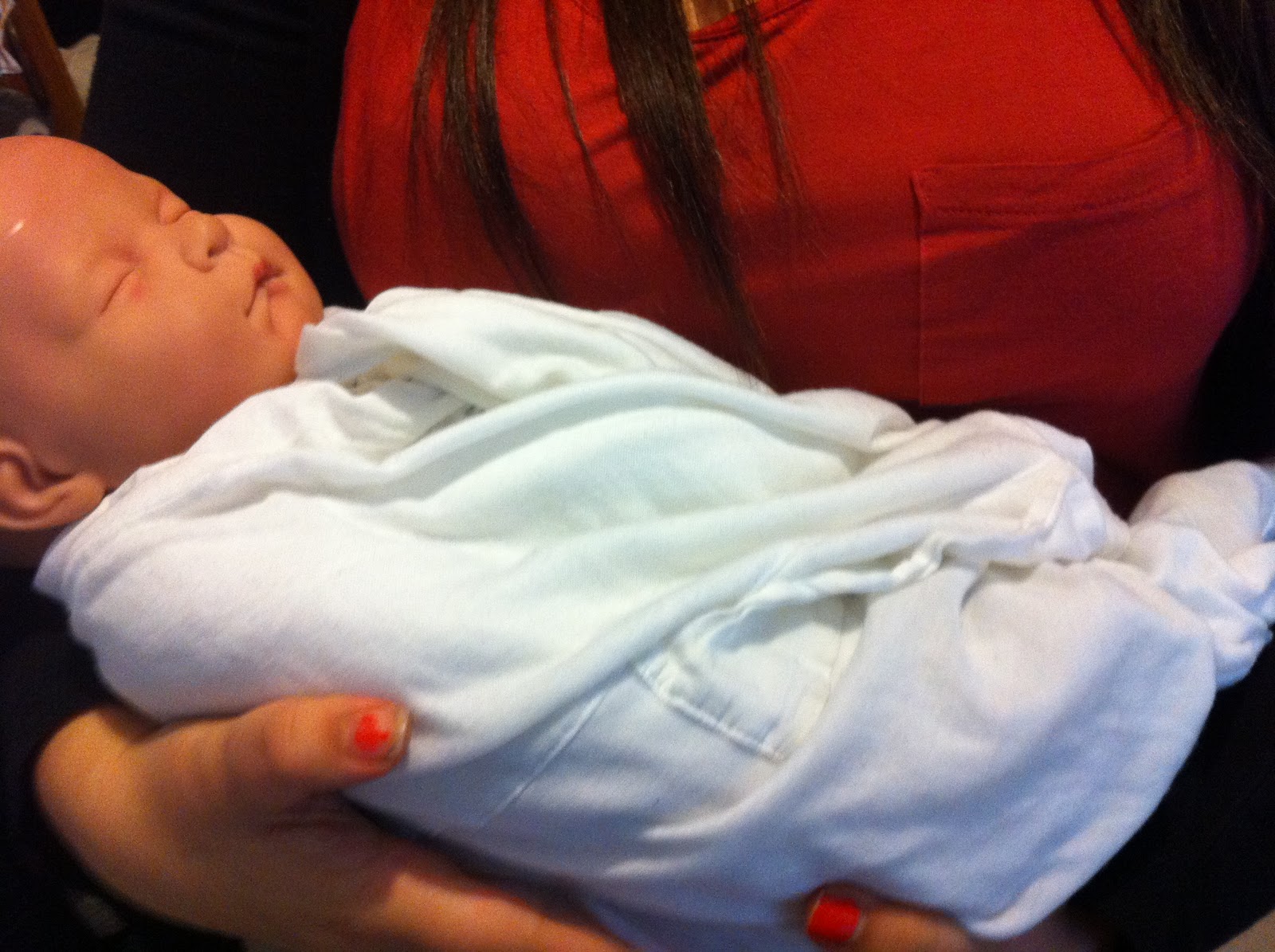
This is the prop we used as the baby, obviously a real baby could not be used like in real films, but we felt that this baby did look slightly realistic and therefore used this doll the best that we could. 


 For the hospital scene, we wanted to make the entire area white to illustrate the setting. The presents a real representations of stereotypical hospitals. 

 Here is the lamp the we used, and for some areas of filming we need to dim the lights instead of having them fully bright. Therefore we used material to cover the lamp: this still reflected light through but dimmed it enough to give the effect we wanted.


This is the cot that we created in order to shoot the scene where the baby supposedly dies of cot death. 


Planning - Location

The locations we used were all in Whittlesey, which is local therefore we had easy access to our locations. The three main locations that we used were:
1. The Vicarage
2. Sir Harry Smith Community College
3. St Andews Church

The first location of the Vicarage is used for Helena's House, and also the hospital room in which Helena has her baby. So we've used this one location to shoot two of our scenes. The second location is our school, Sir Harry Smith Community College as the pyshchatric ward. This we felt would be a successfull location as it is very old structure and our specific part is the slamming of the door when she is in this ward and has gone mental and suffers from her condition. St andrews we going to use for the grave scene when she's mourning the death her husband.